
Meet the Team
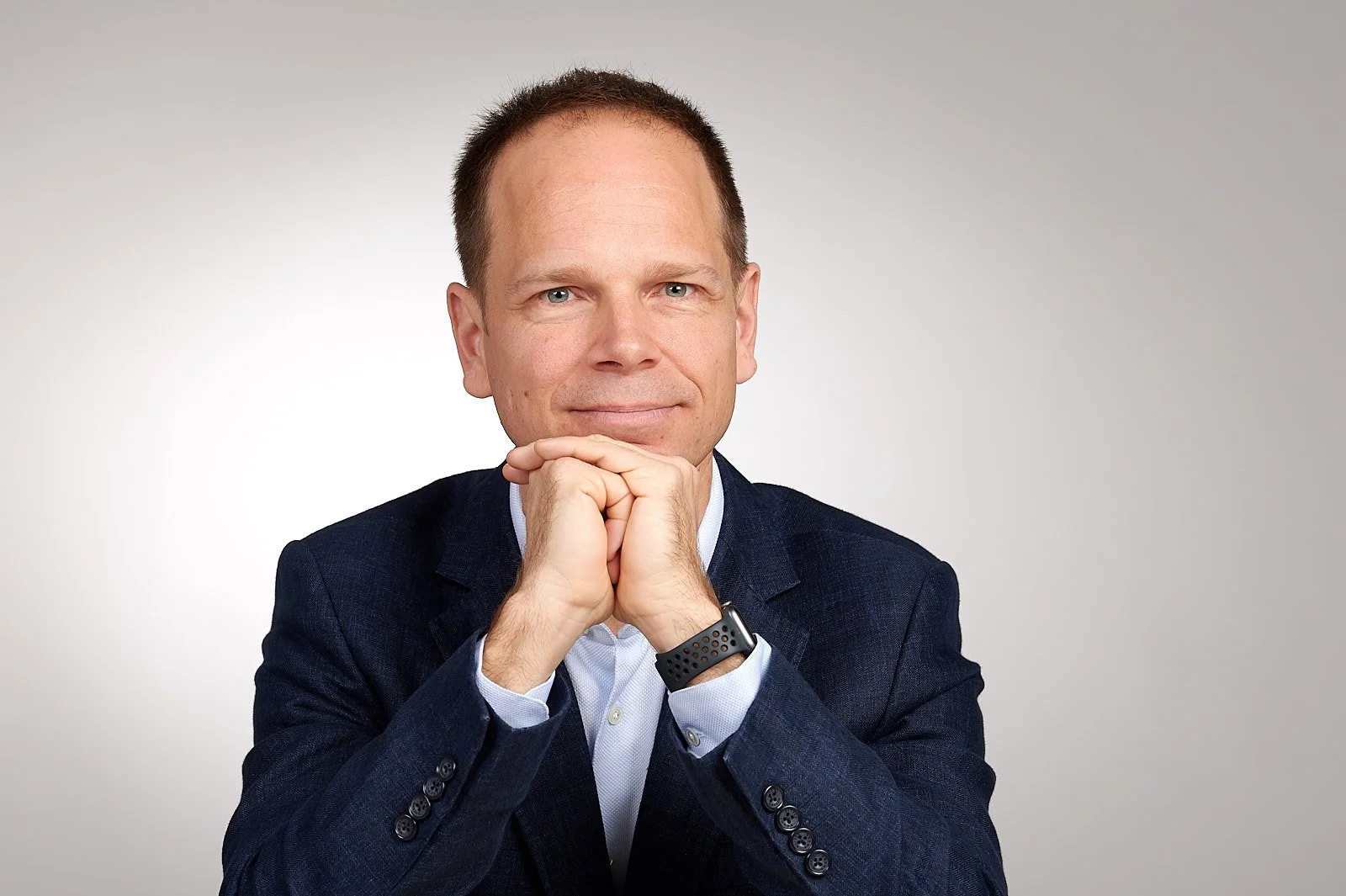
Benoit Cristou
Founder, Cristou GroupBenoit Cristou advises executives and founders on the moments when their voice has to carry — investor pitches, keynotes, boardrooms, press.
Cristou Group is the practice he built around a single conviction: in the age of AI, the leaders who win are the ones whose story holds together across every surface where the company speaks. The work is structured around a proprietary framework — the C.A.R.E. Method — developed across sixteen years of practice in France, Belgium, Japan and the United States.
Benoit's coaching foundations were laid by Bert Decker, Jerry Weissman, and Stéphane André — three of the most respected names in executive communication. He holds a Master's in Audiovisual Law from the Sorbonne and began his career at Disney Television France and Sony Computer Entertainment France before founding his independent practice in 2008.
His recent work includes coaching John Mills for TED 2025, whose talk How We Built Watch Duty, the Lifesaving Wildfire Alert App was named one of the Top 10 Essential TED Talks of 2025. Selected client engagements: Sony, Ubisoft, Coca-Cola, Sanofi, GfK, Watch Duty, PlayStation, Engel & Völkers.
Three further qualifications inform how he works.
He is a Hakomi-certified coach — a body-centered method rooted in mindfulness and present-moment awareness. It trains the listener to hear what is being expressed beneath what is being said.
He is a certified scuba diving instructor. Underwater, communication is non-verbal and the cost of being misread is real. It is the most direct training he knows in reading an audience that cannot interrupt you, and in staying composed when the pressure rises.
He holds WSET Level 3 in wines. The discipline is one of vocabulary — of describing, with precision, what most people can only feel. The same discipline applies to executive voice.
Based outside Washington, D.C. Working with executives across Europe, North America and Asia.
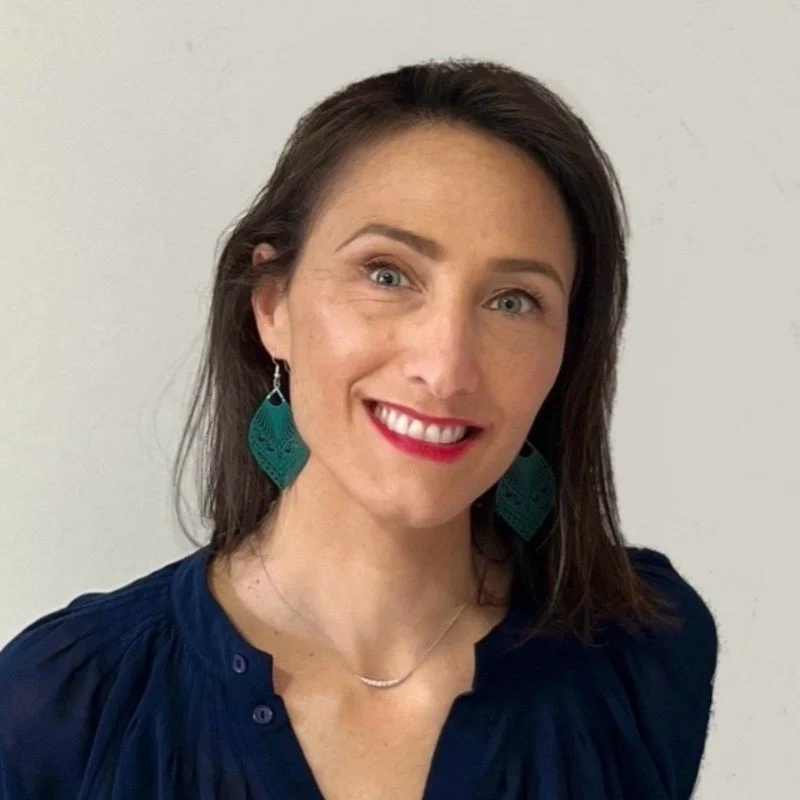
Fayna Lionet
Founder, The Growth WithinFayna Lionet advises founders and senior executives on the decisions that look strategic on paper and turn out, on closer inspection, to be about people.
She came to advisory the long way. Her career began in investment banking across Europe and Asia, then New York — different markets, different cultures, the kind of high-pressure decisions that train a particular discipline of thinking. At twenty-seven she was building and leading the US operations of a French consulting firm. She then spent close to a decade turning around and scaling a finance-and-technology company across the United States and Canada, followed by senior roles in beverage and retail.
What she observed across every sector was the same: the greatest untapped potential was rarely in the plan. It was in the people responsible for carrying it out.
Fayna's coaching foundations are anchored at Columbia Business School, where she completed both the High-Impact Leadership program (Certificate of Excellence) and the Columbia Coaching Certification Program (3CP). Two decades of operating experience inform the work as much as the credentials do — she has sat in the seats her clients sit in.
Two further qualifications shape how she works.
She is a dual French-American, having lived and worked across Europe, Asia, and North America. Leadership reads differently in Paris, Hong Kong and New York; great strategy only travels as far as the people delivering it.
She works in the conviction that strategy and people are not two separate things. The plan and the person executing it are one decision. Most of what looks like a strategic problem turns out, on examination, to be a clarity problem — about self, direction, or action.
She advises through her own practice, The Growth Within, based in New York.
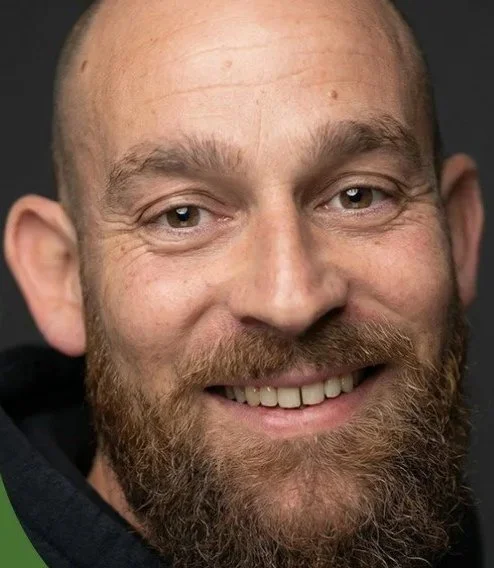
Romain Bernard
Senior Artistic DirectorRomain Bernard designs the visual environment in which a leader's words land. The screen behind the keynote, the motion that punctuates a beat, the typographic rhythm of a frame held for three seconds and remembered for three years.
Based in Paris, his work has shaped the stage for some of the largest corporate moments of the last decade — keynote graphics for E3, the Coca-Cola annual general meeting, Ubisoft EMEA Days and brand events across the entertainment, technology and consumer sectors. He has collaborated with Cristou Group for sixteen years, since the practice's earliest engagements.
The discipline is narrower than it looks. Stage motion design is not advertising and it is not film. It exists in service of a human being who is about to walk onto a platform and address a room of investors, employees, or press — and the visuals must amplify that voice without ever competing with it. The craft is one of restraint as much as invention.
He is, before he is anything else, a typographer and letterer. The rhythm of a phrase set across a 30-metre LED wall is not the same as the same phrase printed in a deck. He works in the discipline of designing words to be felt at scale.
His training extends well beyond the screen. Romain has worked extensively in street art and tattoo — two disciplines in which precision is not a preference but a condition of the form. Both demand that the first line be the right line; both train the hand to commit. That instinct carries through the rest of the work.
Based in Paris.
View portfolio.
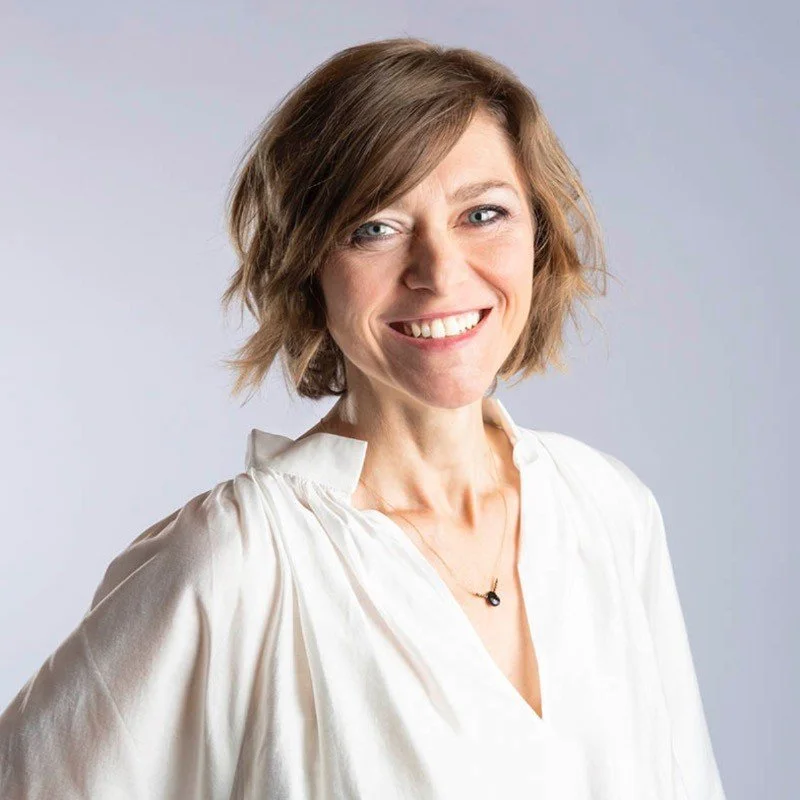
Audrey Bergounioux
Visual DirectorAudrey Bergounioux works on the surface where most executive communication actually happens. Not the keynote stage and not the campaign — the slide, the deck, the document that travels ahead of the meeting and stays in the room after it ends.
Based in Bordeaux, she has spent fourteen years designing presentations for clients across gaming, hospitality, pharmaceutical, and motorsport sectors — among them Ubisoft, Sony PlayStation, Micromania, Sanofi, The Originals Hotels and Quick Belgique. The work spans the full register of executive deliverables: investor decks, internal town halls, conference keynotes, sales presentations, board materials.
The discipline is often misunderstood. Slide design is treated, in most organisations, as a formatting task delegated late and produced fast. Approached as an actual design discipline — typography, hierarchy, restraint, the deliberate use of empty space — it does what no other surface in executive communication can do: it makes the speaker look like they think clearly, before they have said a single word.
Outside the studio, Audrey is a painter — her fine art practice produces works that change in appearance with shifting light conditions. The training is not incidental to the commercial work. A painter learns to compose what the eye lands on first, second, and third; the same instinct decides whether a slide is read or skimmed.
Based in Bordeaux.
View profile.